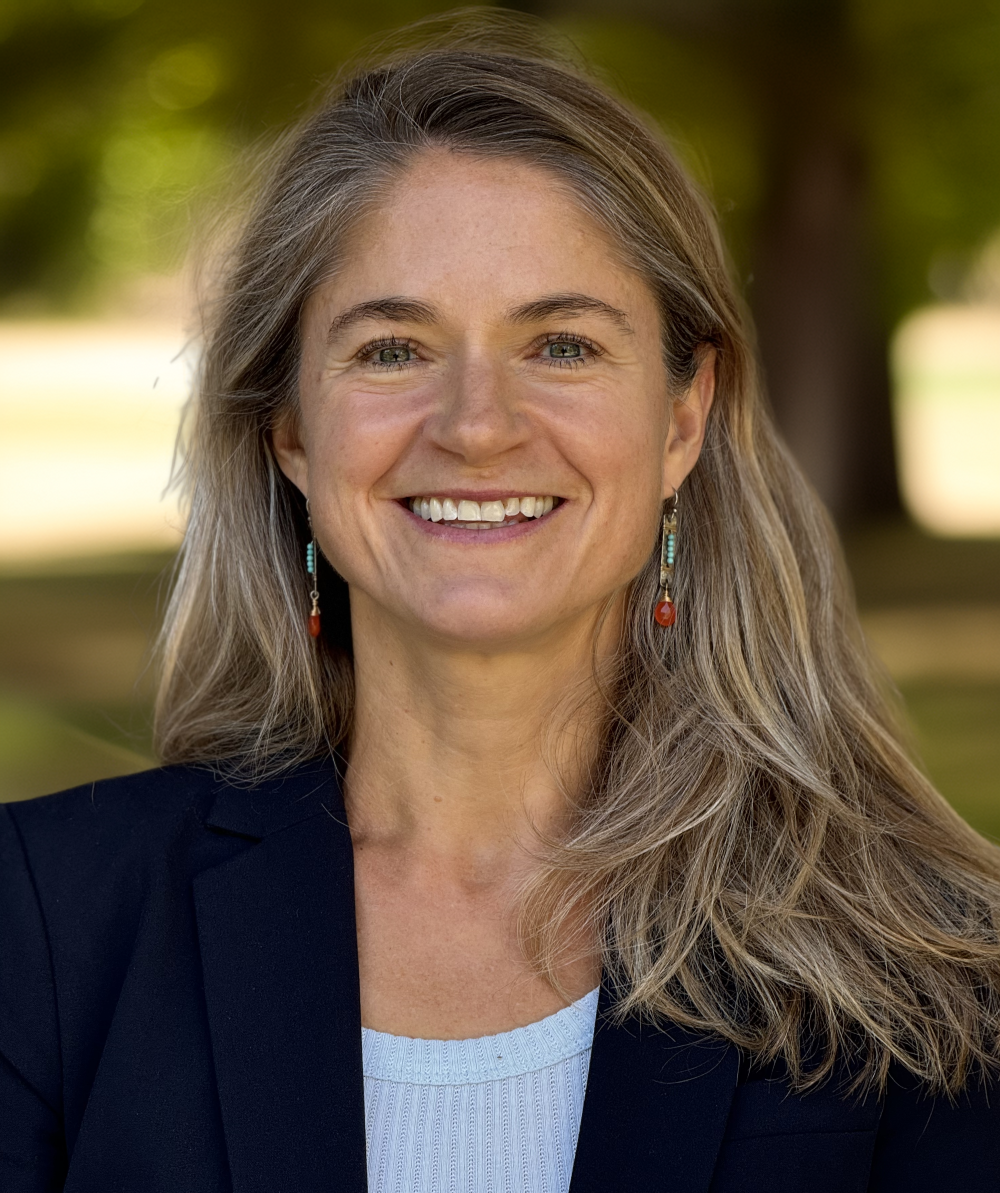
Holly Gibbs
DIRECTOR OF GLUE LAB
GAYLORD A. NELSON DISTINGUISHED CHAIR
hkgibbs@wisc.edu
Teaching & Courses
Holly Gibbs is a geographer whose research focuses on one of the defining sustainability challenges of our time: how to meet growing demand for food and commodities while conserving forests, biodiversity, water resources, and the climate. As Director of the Global Land Use and Environment Lab (GLUE), she leads an interdisciplinary team of scientists, economists, GIS analysts, cartographers, and student researchers working to understand how and why people use land and how those decisions shape environmental and social outcomes around the world.
Trained as a physical scientist, Gibbs has built her career at the intersection of land system science, environmental policy, globalization, and sustainability. She has pioneered innovative approaches that integrate satellite imagery, AI, spatial analysis, econometrics, and large-scale datasets with field-based social and biophysical research. Her work has advanced understanding of the drivers, patterns, and consequences of land-use change at local to global scales, with particular emphasis on tropical deforestation in Brazil and agricultural expansion and private lands conservation in the United States.
A major focus of Gibbs' research is understanding how policies and market interventions influence land-use decisions. She has played a leading role in evaluating corporate zero-deforestation commitments in agricultural supply chains, particularly in the Brazilian soy and cattle sectors. Among the first researchers to rigorously assess whether these commitments reduced deforestation on the ground, she developed novel methods that combined econometric analysis, field surveys, and massive supply-chain datasets to trace agricultural products from hundreds of thousands of farms through millions of transactions to global markets. Her work helped establish new standards for measuring supply-chain sustainability and led to the development of deforestation monitoring systems now used by meatpacking companies in Brazil.
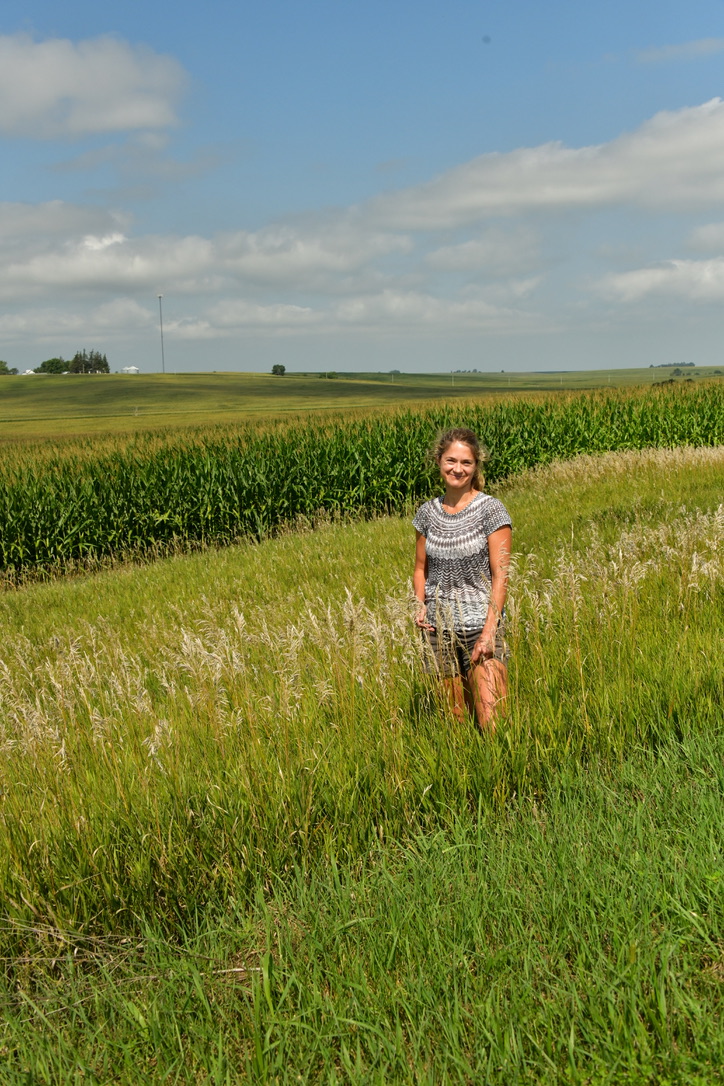
More recently, Gibbs has expanded her research to explore how private landowners–from ranchers and farmers to suburban homeowners–can contribute to conservation, biodiversity, and climate goals. This work examines the often-overlooked role of privately managed landscapes in delivering environmental benefits at meaningful scales and is helping to inform new approaches to conservation policy and practice in the United States, Brazil and beyond.
Since joining UW–Madison in 2011, Gibbs has served as Principal Investigator or Co-Principal Investigator on research awards totaling more than $65 million, including over $24 million directly supporting GLUE research. She has published extensively in leading scientific journals including Science, Nature, and PNAS, and her work has been cited more than 42,000 times. She has been recognized as a Clarivate Highly Cited Researcher—placing her among the most influential scientists worldwide—for three consecutive years.
Her contributions to research, teaching, and service have been recognized through numerous honors, including her election to the American Academy of Arts & Sciences (2026), the Gaylord Nelson Distinguished Professorship (2025), the American Geophysical Union's Piers J. Sellers Global Environmental Change Mid-Career Award (2024), and the UW–Madison Vilas Mid-Career Investigator Award (2024). Additional recognitions include the H.I. Romnes Faculty Fellowship (2020), the Dean's Award for Distinguished Faculty Achievement (2017), the Chancellor's Distinguished Teaching Award (2016), and multiple teaching honors. In 2018, she was awarded the Office of Economic Cooperation and Development Research Fellowship for her sabbatical research in New Zealand. Her publications have received numerous awards including 1st place Mapbiomas award (2024), Proceedings of the Nat. Academy of Sciences Cozzarelli Prize Finalist (2023), Swiss Forum for International Ag Research (2023), Frontiers Planet Prize (2023), most downloaded paper in Applied Geography (2018-2025), top 15 climate papers (2022), one of 5 milestone papers of the last 15 years by Environmental Research Letters (2021).
Gibbs is deeply committed to mentoring the next generation of sustainability scientists. She has taught hundreds of undergraduate and graduate students, developed innovative interdisciplinary courses, and created experiential learning opportunities that connect students with real-world environmental challenges. Through collaborations with communities, governments, and non-governmental organizations, she encourages students to engage directly with decision-makers and contribute to meaningful societal impact.
Learn more about her classes here
Before joining UW–Madison, Gibbs was a David H. Smith Conservation Research Fellow in Stanford University's Program on Food Security and Environment. She earned her Ph.D. from UW–Madison's Center for Sustainability and the Global Environment (SAGE), supported by a U.S. Department of Energy Global Change Environmental Fellowship. Earlier in her career, she led remote sensing and GIS research on global carbon and water cycle projects at Oak Ridge National Laboratory. She holds a B.S. with Distinction in Natural Resources and an M.S. in Environmental Science from The Ohio State University.